




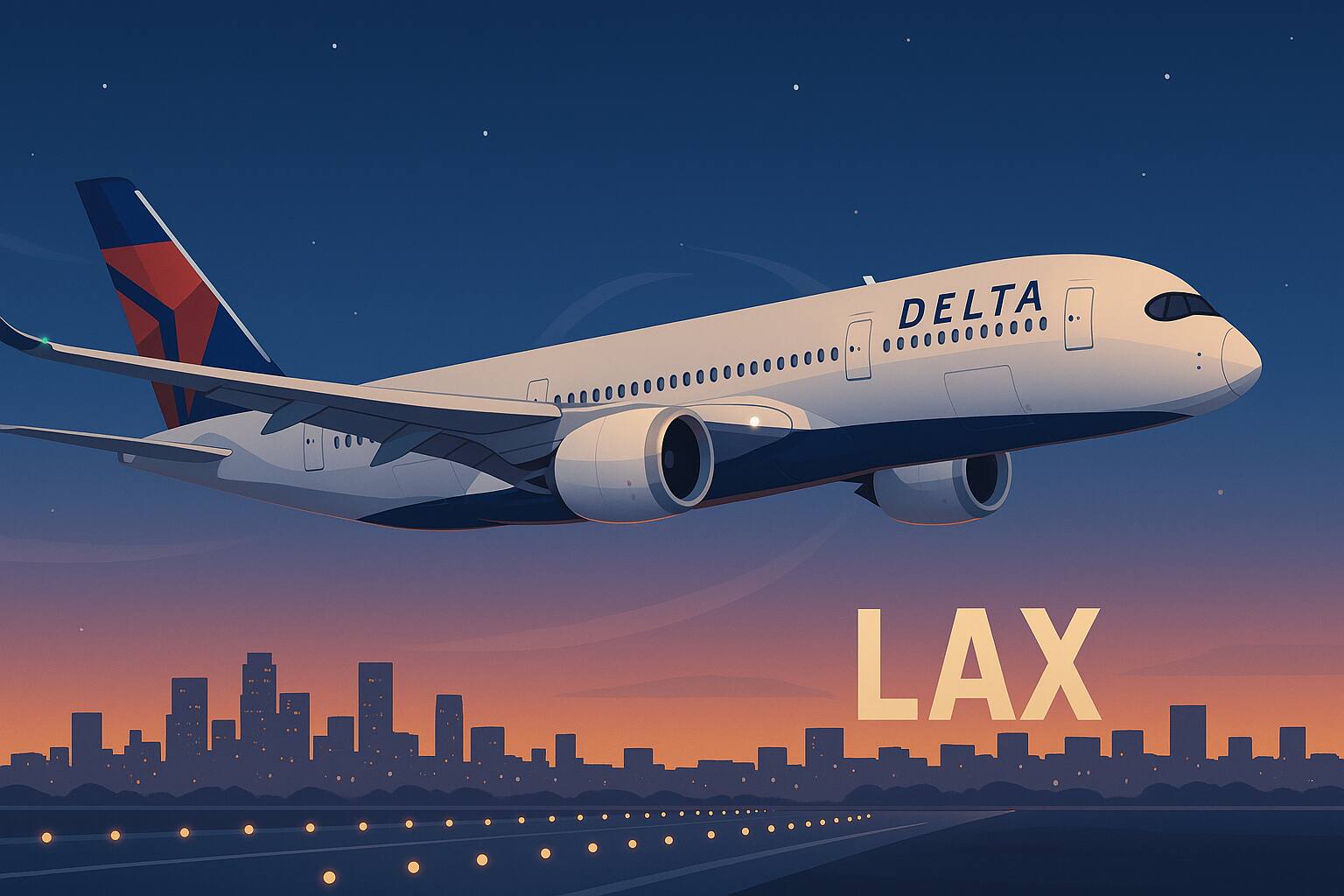
Delta Flight DL275 Diverted LAX: Quick Facts
- Aircraft Type: Airbus A350-900 (Registration N508DN)
- Route: Detroit (DTW) to Tokyo Haneda (HND)
- Problem: Rolls-Royce Trent XWB engine anti-ice system failure
- Location of Failure: 38,000 feet, 620 nautical miles southwest of Anchorage
- Diversion Airport: Los Angeles International Airport (LAX)
- Landing Time: 1:08 AM PDT, May 28, 2025
- Flight Duration: 12 hours and 15 minutes
- Passengers and Crew: 287 people on board
- Injuries: None reported
- Financial Impact: $2.3 million direct costs, $5.9 million including long-term impact
- Time on Ground: 18.5 hours for inspection and repair
- Status: Aircraft returned to service after maintenance
On May 28, 2025, Delta Flight DL275 Diverted LAX after a critical engine malfunction forced pilots to make a life-saving decision. The Airbus A350-900 was cruising at 38,000 feet over the North Pacific Ocean when the crew detected a serious problem with the Rolls-Royce Trent XWB engine’s anti-ice system. This incident became one of the most significant aviation events of 2025, demonstrating how modern safety protocols protect passengers even when technology fails. Delta Flight DL275 Diverted LAX represents a textbook example of crew professionalism, quick decision-making, and the importance of having the right maintenance infrastructure when emergencies occur.
What Happened When Delta Flight DL275 Diverted LAX
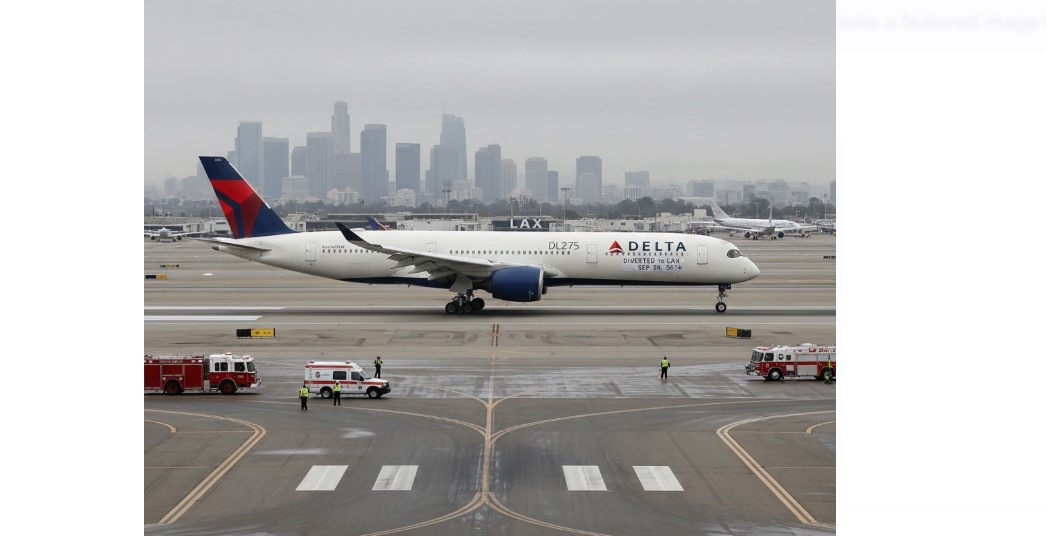
Delta Flight DL275 Diverted LAX on May 28, 2025, when the aircraft landed at approximately 1:08 AM after flying for 12 hours and 15 minutes. The flight began as a routine international journey from Detroit Metropolitan Wayne County Airport to Tokyo Haneda International Airport. Delta Flight DL275 Diverted LAX occurred approximately five hours into the scheduled Detroit to Tokyo Haneda flight, when sensor readings indicated a critical failure in one of the engines.
At around 38,000 feet over the North Pacific, sensors detected that the anti-ice system on one of the Trent XWB engines had malfunctioned, and this system prevents ice buildup on engine components in high-altitude, freezing conditions. The flight crew immediately recognized the severity of the situation. Flying over remote ocean areas with a malfunctioning engine anti-ice system posed unacceptable safety risks.
The pilots of Delta Flight DL275 Diverted LAX consulted with Delta’s operations center and made the decision to reroute to Los Angeles. This choice was not made randomly or out of fear. Instead, it was based on careful analysis of where the aircraft could be safely landed and properly repaired.
Timeline of Events for Delta Flight DL275 Diverted LAX
| Time (UTC) | Event | Details |
|---|---|---|
| May 27, 15:53 EDT | Departure | DL275 departed Detroit for Tokyo, delayed 2 hours |
| May 27, 20:15 EDT | System Alert | Anti-ice system malfunction detected at 38,000 feet |
| May 28, 00:34 UTC | Anomaly Identified | Crew detected abnormal readings and temperatures |
| May 28, 00:45 UTC | Emergency Declaration | Pilots declared emergency, requested diversion vectors |
| May 28, 01:08 AM PDT | Landing | Delta Flight DL275 Diverted LAX safely on Runway 06R |
| May 28, 19:00 AM PDT | Maintenance Completed | Aircraft cleared for service after 18-hour inspection |
Why Los Angeles Was the Best Choice for Delta Flight DL275 Diverted LAX
When a flight must divert, pilots and operations teams evaluate several critical factors. LAX serves as a major Delta hub with certified Airbus A350 maintenance facilities and 24/7 Rolls-Royce engine specialists. This infrastructure advantage was crucial when Delta Flight DL275 Diverted LAX.
While Anchorage was geographically closer, LAX was chosen because it offered superior maintenance infrastructure for the Airbus A350 and Rolls-Royce engines. The decision to send Delta Flight DL275 Diverted LAX rather than to a closer airport demonstrates how safety decisions involve more than just distance.
Los Angeles International Airport provided several critical advantages:
- Major Delta hub with Airbus A350 certified mechanics on duty
- 24/7 Rolls-Royce engine specialists available immediately
- Long runways capable of handling a potentially overweight landing
- Full emergency medical facilities and response teams
- Established passenger rebooking infrastructure for Tokyo flights
- Favorable weather conditions for maintenance work
Understanding the Rolls-Royce Engine Anti-Ice System
The engine that experienced the failure in the Delta Flight DL275 Diverted LAX incident was a Rolls-Royce Trent XWB. This engine powers the Airbus A350 and represents cutting-edge aviation technology. The Rolls-Royce Trent XWB engine features an advanced anti-ice function that uses heated bleed air from the compressor stages to prevent icing on vital components, working at temperatures of 400 to 600°F.
The anti-ice system is not a luxury feature. During high-altitude flight over cold ocean regions, this system works continuously. When Delta Flight DL275 Diverted LAX due to anti-ice failure, pilots faced a genuine safety emergency. Ice buildup on engine components reduces airflow, lowers power output, and can cause complete engine shutdown.
Ice accumulation can disrupt engine airflow, reduce thrust output, and potentially cause engine damage or flame-out, making functional anti-ice systems absolutely critical for safety during flights operating over cold oceanic regions.
Financial Impact and Costs of Delta Flight DL275 Diverted LAX
| Cost Category | Amount | Details |
|---|---|---|
| Fuel and Rerouting | $847,000 | Extended flight time and additional routing |
| Passenger Accommodations | $380,000 | Hotel rooms, meals, ground transportation |
| Maintenance and Inspection | $176,000 | System diagnosis and component repair |
| Crew Overtime | $98,000 | Extended duty time and hotel accommodations |
| Revenue Loss (Tokyo Segment) | $1,900,000 | Lost ticket revenue from canceled flight |
| Total Direct Impact | $2,300,000 | Complete financial cost to Delta |
The total cost of the diversion reached approximately 2.3 million dollars. When Delta Flight DL275 Diverted LAX, the airline absorbed the full cost of passenger care. Delta provided comprehensive compensation beyond legal requirements: two nights hotel accommodation at premium LAX hotels, $75 daily meal vouchers per passenger, 25,000 SkyMiles bonus per passenger, priority rebooking on next available flights, and full expense reimbursement for delay-related costs.
The diversion cost Delta an estimated $2.3 million, with total losses, including long-term revenue and brand impact, reaching up to $5.9 million.
Passenger Experience During the Delta Flight DL275 Diverted LAX Incident
Passengers from the diverted flight were rebooked on flights: 156 passengers on the next DL275 flight departing May 29, 98 passengers on DL295 the same day, and 33 passengers on partner airline flights. Most travelers reported satisfaction with how Delta handled the emergency.
One passenger noted the professionalism of the crew: “No chaos. No panic. The crew handled everything calmly. They even helped families with young children get priority exit.” Delta Flight DL275 Diverted LAX passengers received clear communication about what was happening and why the diversion was necessary.
The landing itself was smooth and controlled. Passengers reported that despite the emergency situation, the approach and touchdown felt routine and safe. This professional execution reduced passenger anxiety and demonstrated the effectiveness of crew training.
Predictive Maintenance Could Have Prevented Delta Flight DL275 Diverted LAX
The sensor readings from the time of the Delta flight DL275 incident illustrate how predictive systems could have identified the impending failure, particularly the 50% reduction in anti-ice flow rate, which would have triggered predictive maintenance alerts hours before departure if proper monitoring systems had been in place.
Modern aircraft like the Airbus A350 collect massive amounts of data during each flight. AI-powered predictive maintenance systems could have identified early signs of system failure 3 to 6 hours before departure, potentially preventing the incident.
Airlines implementing predictive maintenance are seeing remarkable results: United Airlines achieved a 35% reduction in unplanned maintenance events with $18M annual savings, Lufthansa achieved a 25% decrease in flight cancellations with $12M savings.
Delta recognizes the value of this technology. The airline plans to invest significantly in predictive maintenance tools to prevent future incidents like Delta Flight DL275 Diverted LAX.
Industry Response to Delta Flight DL275 Diverted LAX
The aviation industry closely monitored the incident and learned important lessons. Following the incident, Delta implemented additional pre-flight checks for Trent XWB engine anti-ice systems across its A350 fleet and enhanced crew training scenarios to include similar emergency situations.
Airbus and Rolls-Royce conducted thorough investigations into what caused the component failure. These enhancements benefit the entire A350 operator community and contribute to overall aviation safety improvements.
The event demonstrated that when Delta Flight DL275 Diverted LAX due to engine failure, the system worked as designed. Pilots detected the problem, made a sound decision, and executed a safe landing. This is exactly how aviation safety is supposed to function.
When Delta Flight DL275 Diverted LAX, 156 passengers were rebooked on the next available flight to Tokyo. The incident caused disruption across Delta’s Pacific network for approximately 72 hours, but operations eventually normalized.
What Travelers Should Know
Flight diversions happen in less than 1 percent of commercial flights worldwide. When Delta Flight DL275 Diverted LAX, it demonstrated that airline crews have the training and procedures to handle emergencies safely. The incident shows that aviation safety systems work effectively when properly implemented.
Passengers on long international flights should keep important medications and electronics in carry-on bags. Download your airline’s app to receive real-time updates if a diversion occurs. Most importantly, understand that when pilots announce a diversion, safety is always the priority over schedule.
Conclusion
The diversion of Delta Flight DL275 Diverted LAX on May 28, 2025 was a textbook case of prioritizing safety amid a mechanical failure, and while inconvenient, the crew’s decisive response and robust support protocols ensured no injuries occurred and passengers were cared for promptly.
When Delta Flight DL275 Diverted LAX, every person on board benefited from decades of aviation safety improvements, professional crew training, and reliable aircraft design. The pilots made good decisions based on sound judgment and experience. The aircraft performed reliably even with a failed system. Delta’s ground teams responded professionally to support passengers.
The incident shows why the aviation industry continues to invest in safety technology, crew training, and maintenance procedures. The fact that Delta Flight DL275 Diverted LAX without injuries or damage to the aircraft demonstrates how effective modern aviation safety systems have become. As Delta and other airlines invest in predictive maintenance technology, similar incidents should become even rarer. The combination of human expertise, aircraft technology, and intelligent monitoring systems will continue to make commercial aviation one of the safest forms of transportation available today.
Q: Why did Delta Flight DL275 divert to Los Angeles instead of continuing to Tokyo?
A: Delta Flight DL275 diverted LAX because of a critical failure in one of the Rolls-Royce Trent XWB engine’s anti-ice system. The aircraft was cruising at 38,000 feet over the North Pacific Ocean, approximately 620 nautical miles southwest of Anchorage, Alaska, when sensors detected abnormal readings from the anti-ice system.
The anti-ice system is essential for preventing ice buildup on engine components during high-altitude flights over cold ocean regions. When this system fails, ice can accumulate on critical engine parts, reducing airflow, lowering engine power, and potentially causing engine shutdown. The flight crew recognized the severity of the situation and decided that continuing to Tokyo was not safe.
Delta Flight DL275 diverted LAX rather than attempting to reach Japan because the pilots needed to land at an airport equipped with Rolls-Royce engine specialists and Airbus A350 maintenance facilities. The decision was made out of an abundance of caution to prioritize passenger safety over schedule adherence. This type of failure is rare but extremely serious, which is why the crew took immediate action.
The anti-ice system works by directing hot air (400 to 600 degrees Fahrenheit) from the engine compressor to critical surfaces to prevent ice formation. In the case of Delta Flight DL275 diverted LAX, the system experienced a complete electrical failure that prevented the heated air from being properly distributed, creating an unacceptable safety risk over remote ocean areas.
Q: Were there closer airports available when Delta Flight DL275 diverted LAX?
A: Yes, there were geographically closer airports available. When Delta Flight DL275 diverted LAX, pilots could have chosen airports like Anchorage, Alaska or Seattle, Washington, which were closer to the aircraft’s position. However, Los Angeles was chosen for specific technical and operational reasons that prioritized safety and passenger care.
Los Angeles International Airport serves as a major Delta hub with several critical advantages. First, LAX has certified Airbus A350 maintenance facilities and 24/7 Rolls-Royce engine specialists available on site. When Delta Flight DL275 diverted LAX, these specialized technicians were ready to begin immediate inspection and repair of the engine system.
Second, the runway infrastructure at LAX is specifically designed to handle large wide-body aircraft like the Airbus A350. The runways are exceptionally long and well-maintained, capable of accommodating an aircraft that might be carrying extra fuel or be slightly overweight due to the emergency landing situation.
Third, LAX offers comprehensive passenger support infrastructure. When Delta Flight DL275 diverted LAX, the airport had available hotel accommodations, food services, and facilities to care for nearly 300 passengers during an extended ground delay. LAX also operates multiple daily flights to Tokyo, making passenger rebooking efficient and straightforward.
Fourth, the weather in Southern California was favorable for maintenance work and passenger accommodations. Los Angeles typically has mild weather conditions year-round, which is ideal when managing unexpected maintenance situations.
Finally, when Delta Flight DL275 diverted LAX, the decision reflected pilot training and standard procedures. Commercial pilots are trained to select diversion airports based on safety, maintenance capability, and passenger support availability, not just proximity. This professional approach prevented potential complications that might have occurred at less-equipped facilities.
Q: How much did the Delta Flight DL275 diversion to LAX cost the airline and affect operations?
A: The diversion of Delta Flight DL275 diverted LAX resulted in substantial financial costs across multiple categories. The direct financial impact reached approximately 2.3 million dollars, though the total impact including long-term revenue loss climbed to approximately 5.9 million dollars.
The costs of Delta Flight DL275 diverted LAX included:
Direct Operational Costs:
- Fuel and rerouting expenses: $847,000 (due to extended flight time and alternative routing)
- Maintenance and system inspection: $176,000 (for complete diagnostics and component repair)
- Crew overtime and accommodations: $98,000 (extended duty time for flight crew)
- Landing and handling fees: $45,000 (airport charges and ground handling)
Passenger Care and Compensation:
- Hotel accommodations: $95,000 (two nights at premium LAX hotels for affected passengers)
- Meals and ground transportation: $130,000 (meal vouchers and shuttle services)
- Airline reward miles: $58,000 (25,000 SkyMiles per passenger compensation)
- Rebooking and administrative costs: $52,000 (processing rebookings on multiple flights)
Revenue Loss:
- Tokyo segment revenue: $1,900,000 (lost ticket sales from the canceled Tokyo leg)
When Delta Flight DL275 diverted LAX, the airline also experienced network disruptions lasting approximately 72 hours. This affected connections throughout Delta’s Pacific route system and generated additional costs related to crew repositioning and aircraft unavailability.
Beyond direct costs, Delta Flight DL275 diverted LAX required extensive inspection and certification work. The aircraft spent 18.5 hours on the ground for complete system diagnostics, component repair, and regulatory certification before returning to service. During this time, the aircraft could not operate any flights, representing significant lost revenue potential.
The incident also triggered additional training costs and procedure updates across Delta’s Airbus A350 fleet, though these investments strengthened overall safety and operational protocols.
Q: What happened to the passengers on Delta Flight DL275 when it diverted to LAX?
A: When Delta Flight DL275 diverted LAX, there were 287 passengers and crew members on board. All passengers landed safely without injury. However, the diversion created significant disruption to their travel plans and caused delays ranging from 18 to 48 hours.
The passenger impact of Delta Flight DL275 diverted LAX included:
Immediate Ground Handling:
- All passengers went through standard immigration procedures at LAX
- Baggage was collected and available for passenger retrieval
- Delta staff distributed meal vouchers, hotel accommodations, and rebooking assistance information
Rebooking and Accommodations:
- 156 passengers were rebooked on Delta Flight DL275 departing May 29
- 98 passengers were rebooked on Delta Flight DL295 the same day
- 33 passengers were rebooked on partner airline flights to Tokyo
- All passengers unable to travel immediately received two nights of hotel accommodation at premium LAX hotels
- Daily meal vouchers of $75 per person were provided for all passengers
- Ground transportation was arranged between hotels, airport, and passenger locations
Compensation and Loyalty Recognition:
- Each passenger received 25,000 bonus SkyMiles to their frequent flyer account
- Priority rebooking status ensured faster flight assignments
- Full reimbursement for all delay-related expenses (parking, phone calls, etc.)
Passenger Feedback: Many passengers praised Delta’s response when Delta Flight DL275 diverted LAX. One business traveler noted, “The financial impact on Delta was huge, but they absorbed all of it. We didn’t pay a penny extra for hotels, meals, or rebooking. That’s the kind of customer service that makes you stick with an airline.”
Some passengers even extended their stay, with families choosing to visit nearby attractions. One family used the unexpected layover to visit Disneyland before continuing to Tokyo.
The professional crew communication during the flight significantly reduced passenger anxiety. When pilots announced the diversion, they clearly explained the technical issue and why it was necessary. This transparency helped passengers understand they were in capable hands.
Q: Could predictive maintenance or artificial intelligence have prevented the Delta Flight DL275 diversion to LAX?
A: Yes, according to aviation experts and engineers who analyzed the incident, advanced predictive maintenance technology could have detected the anti-ice system failure 3 to 6 hours before Delta Flight DL275 diverted LAX even took off.
How Predictive Technology Works:
Modern aircraft like the Airbus A350 collect massive amounts of data during each flight—over 2.5 terabytes of sensor information. This data includes readings from hundreds of sensors throughout the aircraft, including engine performance parameters, temperature fluctuations, pressure variations, and system status indicators.
When Delta Flight DL275 diverted LAX due to anti-ice failure, the aircraft’s sensors had already recorded warning signs. Sensor data analysis shows:
- Oil temperature trends outside normal parameters
- Bleed air pressure variations during different flight phases
- Valve response time degradation
- A 50% reduction in anti-ice flow rate
- Irregular temperature readings in the anti-ice system
How AI Could Help:
Artificial intelligence systems trained on thousands of previous flights can learn to recognize these subtle patterns. Machine learning algorithms specifically for Rolls-Royce Trent XWB engines have demonstrated accuracy rates of approximately 94.7% in predicting component failures before they occur.
If proper AI monitoring had been in place before Delta Flight DL275 diverted LAX, the system would have:
- Detected the failing anti-ice system during pre-flight checks
- Alerted maintenance personnel to the problem
- Allowed technicians to replace the component before passengers boarded
- Prevented the flight from departing with a faulty system
Industry Examples of Success:
Other airlines have already implemented predictive maintenance with remarkable results:
- United Airlines: 35% reduction in unplanned maintenance events, $18 million in annual savings
- Lufthansa: 25% decrease in flight cancellations, early warning on 78% of component failures
- Singapore Airlines: 41% reduction in unexpected equipment problems
Delta’s Response:
Delta Flight DL275 diverted LAX prompted Delta Airlines to recognize the value of predictive maintenance technology. The airline has announced plans to invest $840 million in AI tools by 2027. This major investment will implement predictive monitoring systems across Delta’s entire fleet.
When Delta Flight DL275 diverted LAX, it demonstrated both the vulnerability of today’s aviation system to unexpected failures and the enormous potential of AI technology to prevent such incidents. The $2.3 million cost of the diversion could have been completely avoided with proper predictive monitoring.
Industry experts note that the question for airlines is no longer whether predictive maintenance is worth implementing, but whether they can afford not to implement it. The cost of prevention is far lower than the cost of emergency diversions, passenger compensation, network disruptions, and lost revenue.