



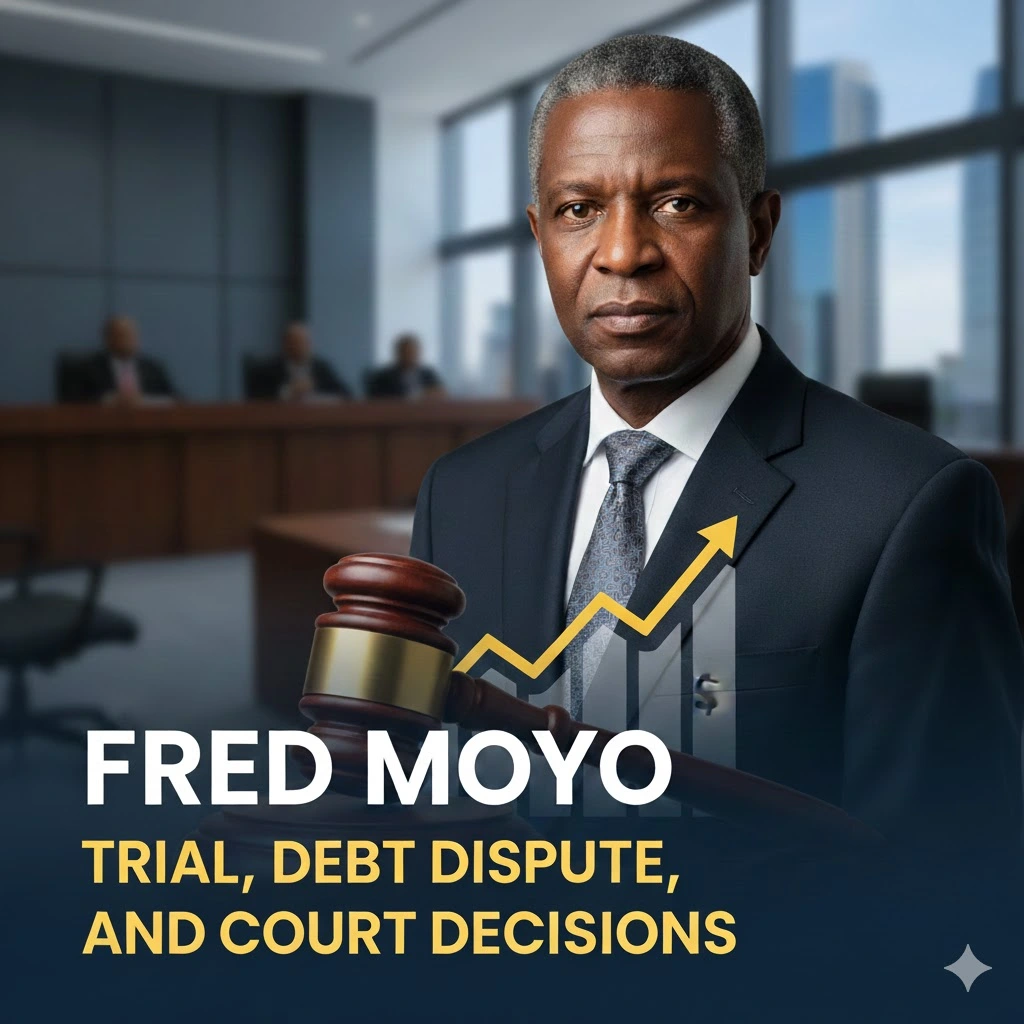
The fred moyo trial has drawn attention across Zimbabwe because it involves a long-running debt dispute, appeals, and major questions about asset management and financial accountability. Although commonly called a “trial,” the matter is mainly a civil court process linked to debt recovery. Understanding the case requires looking at the background of the loan agreement, how the dispute grew, the steps taken in court, and why the decisions have continued to be discussed in public conversations.
The fred moyo trial highlights how financial agreements can turn into major legal battles when repayments are not completed and when assets are moved while debt obligations remain active. This matter gives insight into the relationship between banks and business figures, how courts respond to disputed asset transfers, and how civil judgments are enforced.
Background and Origin of the Fred Moyo Trial
To understand the fred moyo trial, it is important to look back to 2012, when a loan arrangement was made between a mining company linked to him and a major commercial bank. The agreement involved a large sum intended to support mining operations. Over time, the company struggled and the repayments reportedly fell behind. The bank claimed that attempts to recover the funds were not successful.
As the dispute grew, the bank alleged that properties belonging to Moyo had been transferred to a family trust at a time when the loan was already in difficulty. During the fred moyo trial, the court examined whether this transfer had been made in good faith or whether it had been done to block the recovery process. Asset transfers made under financial pressure often face close scrutiny because the law protects the rights of creditors.
The case moved forward in 2019 when the High Court heard the matter and later issued a detailed ruling. The findings of the court played a major role in shaping public understanding of the fred moyo trial.
High Court Findings in the Fred Moyo Trial
The High Court judgment marked one of the most important steps in the fred moyo trial. The court determined that the debt remained outstanding and that enforcement measures were necessary. The judge ruled that the transfer of immovable property into the family trust could not be considered a charitable or standard estate-planning decision. Instead, it appeared connected to the growing debt problem.
Because of this, the court ruled that the bank had the right to seek recovery through asset seizure. The ruling extended to the possibility of placing the estate under formal administration to satisfy the outstanding balance. During the fred moyo trial, the court stated clearly that the movement of assets at that particular moment was not justified in the eyes of the law.
An auction of attached property took place soon after. However, the value recovered was extremely low compared to the amount owed. This created further legal steps and helped shape the later stages of the fred moyo trial.
Attempts at Appeal in the Fred Moyo Trial
After the High Court ruling, Moyo attempted to challenge the decision. He approached the Supreme Court to seek leave to appeal. However, during this phase of the fred moyo trial, the Supreme Court reviewed the application and decided to strike it off. This meant that the earlier judgment remained in effect.
The refusal of the Supreme Court to allow the appeal strengthened the bank’s position. It also ensured that the enforcement measures approved by the High Court could continue. This part of the fred moyo trial is important because it shows how appellate courts examine procedural issues and whether a case has grounds strong enough for review.
With the appeal struck off, the matter shifted back to enforcement. That placed renewed attention on the state of the estate, the attached assets, and the amount still owed.
Asset Seizure and Financial Impact in the Fred Moyo Trial
One of the central features of the fred moyo trial is the attempt to convert assets into financial recovery. The bank sought attachment, auctioning, and possible sequestration of the estate. Although an auction was held, the amount raised was very small compared to the size of the debt.
This outcome raised questions about the value of attached property, the condition of assets placed under enforcement, and how much banks can reasonably expect to recover when companies collapse or when repayments fall behind. The fred moyo trial illustrates the challenges faced by creditors in cases where borrowers have limited liquid assets or when property transfers take place at key moments.
For business owners and financial institutions, the case serves as an example of why loan agreements need strong protective terms, clear repayment structures, and transparent reporting on how borrowed funds are used.
Legal Lessons from the Fred Moyo Trial
The fred moyo trial offers several important legal lessons. First, courts look carefully at the timing of asset transfers. Even if a trust or family structure is legally recognised, the court can override it if the transfer was made when the debtor was already facing a confirmed financial obligation. This principle ensures that creditors are not unfairly blocked when they seek repayment.
Second, the fred moyo trial demonstrates that enforcement processes are long and expensive. Auctions may not generate sufficient value, and courts may need to consider deeper forms of recovery, such as estate administration.
Third, the case shows that even high-profile individuals must comply with the same commercial and legal standards as any other borrower. Personal position or political background does not shield anyone from civil law when the debt is proven and enforceable.
How the Public Views the Fred Moyo Trial
Over time, the fred moyo trial has been discussed across media outlets and public forums. Some view the matter as a straightforward debt enforcement case. Others see it as an example of how financial disputes can turn into drawn-out legal conflicts when assets are moved at sensitive times.
Regardless of personal opinion, the fred moyo trial remains one of the better-known debt-related cases in the country. It continues to be referenced whenever discussions arise around bank lending, creditor rights, corporate governance, and the duties of business leaders. Its public visibility also means that it will likely remain a point of reference for future cases involving similar circumstances.
Long-Term Effects of the Fred Moyo Trial
The fred moyo trial has long-term effects because it highlights the responsibilities of borrowers, especially those managing large companies or operating in regulated industries. Financial institutions now refer to the case when explaining the importance of transparent ownership structures.
The broader business community sees the fred moyo trial as a reminder that debt obligations must be handled early before enforcement escalates. Clear communication with lenders, structured repayment plans, and proactive problem-solving can prevent disputes from becoming legal battles.
Table: Key Events in the Fred Moyo Trial
| Year | Event Description |
| 2012 | Loan agreement is made between the mining company and the bank |
| 2019 | High Court rules that the debt is valid and orders asset seizure |
| 2019 | Auction of attached property generates a very low sum |
| 2020 | Supreme Court strikes off the appeal application |
| Following Years | Continued public interest in the fred moyo trial |
Detailed Summary of the Fred Moyo Trial
The fred moyo trial centers on a commercial loan dispute that escalated into a major civil enforcement case. A loan made in 2012 fell into arrears, leading the bank to take legal action. The High Court reviewed the evidence and ruled that the debt remained unpaid, confirming that the bank could seize assets to recover the amount owed. During the hearings, the court examined asset transfers made into a family trust and determined that these transfers did not meet the legal standards of good faith. When the matter reached the Supreme Court, the appeal application was struck off, which confirmed the earlier ruling.
The fred moyo trial continues to be discussed because it shows how civil courts handle debt enforcement, how asset transfers are reviewed when borrowers are already under financial pressure, and how long legal proceedings can take when large debts are involved. The case remains one of the most widely referenced debt disputes of its kind and plays an important role in discussions around lending, accountability, and commercial law in Zimbabwe.
Conclusion
The fred moyo trial stands as a significant example of how financial disputes progress when loan agreements are not fulfilled and when asset ownership changes at critical times. Through the various stages of the case, the courts emphasised transparency, accountability, and fairness for creditors. The outcome reinforced that civil law applies equally to all borrowers and that asset movements made during periods of financial distress will always face detailed judicial examination. The lasting influence of the fred moyo trial continues to shape legal understanding around debt recovery, estate administration, and commercial obligations across the country.
1. What is the Fred Moyo Trial about?
The fred moyo trial is a civil debt case involving unpaid loan obligations, asset transfers, and court-ordered recovery measures. The case examines how the courts handled the dispute and the legal steps taken to enforce the debt.
2. Why did the Fred Moyo Trial involve a family trust?
During the fred moyo trial, the court reviewed the transfer of immovable property into a family trust. The court determined that the transfer was made at a time when debt obligations were already strained, which raised questions about whether the move was intended to block recovery.
3. Did the Supreme Court make a final decision in the Fred Moyo Trial?
Yes. The Supreme Court struck off the appeal application, which meant the earlier High Court ruling remained in effect. This confirmed the debt and allowed enforcement measures related to the fred moyo trial to continue.
4. Was the Fred Moyo Trial a criminal case?
No. The fred moyo trial was not a criminal case. It was a civil enforcement matter involving debt recovery, asset evaluation, and court rulings related to repayment and estate administration.
5. How does the Fred Moyo Trial compare to other civil cases in Zimbabwe?
The fred moyo trial is often compared to other civil debt matters because it involves asset transfers, loan defaults, and court enforcement procedures. For general understanding of civil law principles, you may also read about civil law on Wikipedia: https://en.wikipedia.org/wiki/Civil_law_(common_law)